
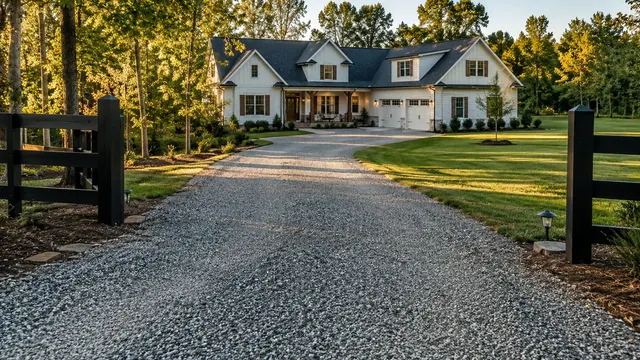
Gravel Driveway Installation Conroe TX: Built for Montgomery County Clay & Rain
Conroe TX Driveway Experts builds gravel driveway installation for Conroe homeowners and property owners across Montgomery County. We clear out what's there now, prep the site and sub-grade correctly, then plan and build a new driveway designed to perform in this area's soil and climate from day one. Gravel remains the practical choice for long rural drives across Willis, Dobbin, and the acreage belt around Montgomery, where a 600 to 1,500 foot driveway in concrete or asphalt would be cost-prohibitive. We build with TxDOT Grade 1-2 crushed granite or limestone over a compacted sub-base, using geotextile separation fabric on the sandy and clay-mixed soils where base rock tends to work its way down into the ground over time.
Call (936) 284-3720Get a Free Driveway Quote
No obligation. We will call or text back, usually same day.
Gravel Driveway Installation Conroe TX
Here is what a gravel driveway installation project with Conroe TX Driveway Experts actually looks like on the ground, from the numbers that matter to the details most quotes skip past.
Splendora and Segno fine sandy loam soils, common through New Caney, Porter, and the eastern county, have a higher sand fraction than Conroe's clay but come with their own problem: high water tables and a tendency toward quicksand-like sub-grades in wet weather. We compact and fabric-separate every base course specifically to fight that.
At a glance: 4-6 in. is the compacted base depth, 1,500 ft covers longest rural drives we grade, and Same Day is the figure for typical for standard lots. Budget-wise, most homeowners land in the $1.75 to $3.50 per sq. ft. installed range, with a typical project running $1,050 to $2,100 for a typical 600 sq. ft. driveway; 4 to 6 inch compacted depth with geotextile fabric.
- Crushed granite or limestone, 4 to 6 inch compacted depth on standard driveways
- Geotextile fabric (Mirafi 500X or equal) laid where sub-grade is soft or sandy
- Crowned profile grading so water sheds to both sides, not down the center
- Culvert coordination with your county precinct if the drive crosses a roadside ditch
Cutting Corners
Dump loose gravel on graded dirt and call it finished
Our Approach
Fabric-separate the base, compact in lifts, and crown the profile for drainage
Technical Specs
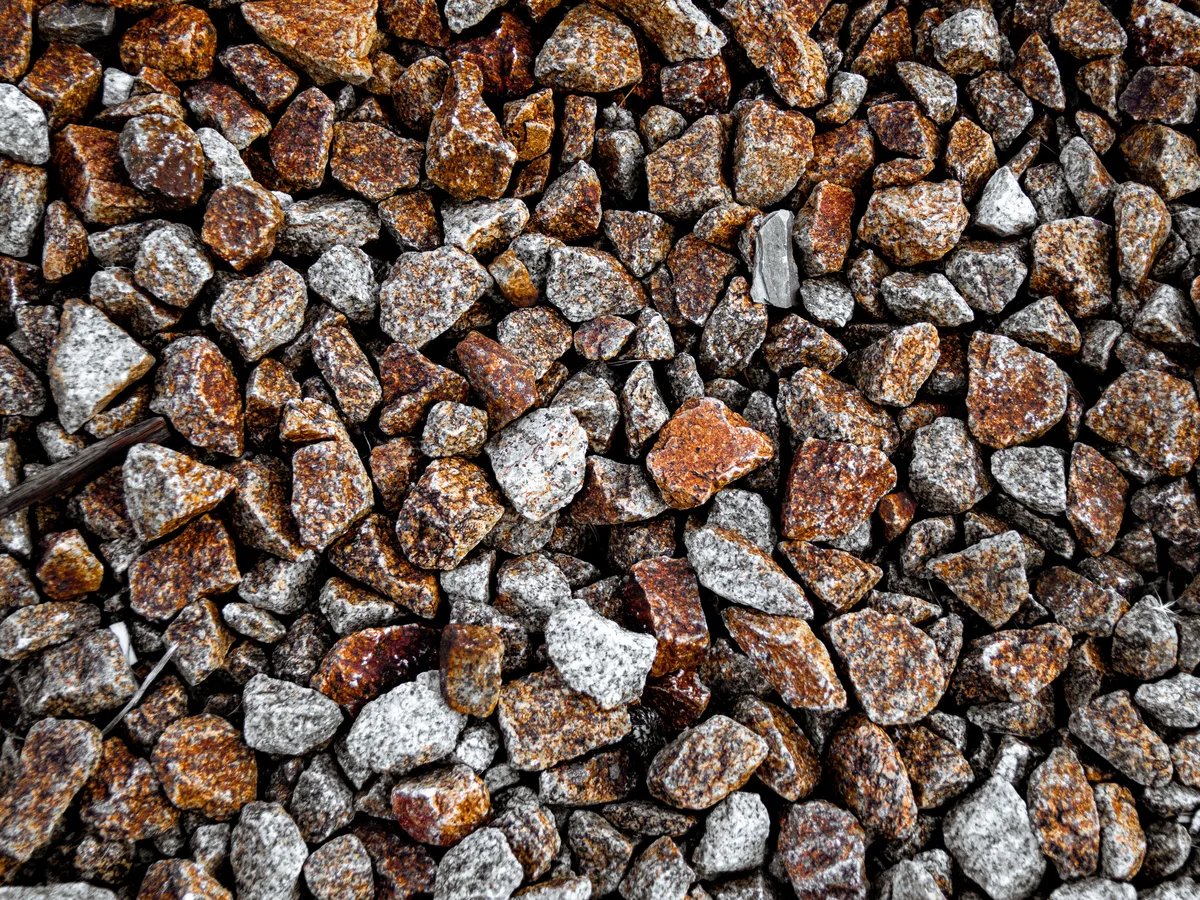
- Base material
- TxDOT Grade 1-2 crushed granite or limestone
- Separation fabric
- Mirafi 500X or equivalent woven geotextile
- Compacted depth
- 4 to 6 inches standard
- Grading
- Crowned for two-sided drainage
Quick recap: Base material is TxDOT Grade 1-2 crushed granite or limestone | Separation fabric is Mirafi 500X or equivalent woven geotextile | Compacted depth is 4 to 6 inches standard | Grading is Crowned for two-sided drainage.
Gravel Driveway Installation: What Actually Matters
A gravel driveway lives or dies on what is underneath the visible rock. On the sand-over-clay soil profiles typical of the rural acreage belts in Willis, Magnolia, Splendora, New Caney, Cut and Shoot, and Dobbin, loose base rock placed directly on native ground will slowly sink into the soil during the region's heavy rainy-season storms. Within a year or two the driveway feels thin and rutted even though plenty of rock was originally delivered.
We stop that by laying a woven geotextile separation fabric, typically Mirafi 500X or an equivalent, between the native soil and the crushed base course. The fabric lets water pass through while keeping the rock from migrating downward, which is the difference between a gravel drive that holds its depth for a decade and one that needs another load of rock every couple of years.
For long rural drives, the crown profile matters as much as the base. We grade every gravel driveway with a slight center crown so water sheds to both sides into the roadside ditch rather than channeling down the middle and washing out a rut. On drives crossing a county ditch, we also coordinate culvert sizing with the correct Montgomery County precinct, since Precinct 2 requires 18 to 24 inch RCP or HDPE pipe and each precinct enforces its own ditch flow-line rules.
Before We Arrive
A little prep on your end keeps the gravel driveway installation timeline on track. Here is what actually helps, specific to this job, not a generic moving-day checklist.
- Clear the drive path of parked vehicles, trailers, or equipment for the full grading day
- Mark any buried irrigation lines or dog fencing that runs near the driveway edges
- Expect a loader and dump trucks accessing the property, which needs gate clearance
- If your drive crosses a roadside ditch, have any existing culvert permit paperwork on hand
- Livestock or loose animals should be secured away from the work area for the day
How Your Gravel Driveway Installation Works
Four stages, start to finish. We will tell you which day you are on and what to expect next, rather than leaving you guessing mid-project.
Site Walk & Culvert Check
We walk the full driveway path, check ditch crossings, and confirm whether a precinct culvert permit applies.
Grading & Fabric
The path is graded to a crowned profile and geotextile fabric is placed on soft or sandy sections.
Base Placement & Compaction
Crushed granite or limestone base goes down in compacted lifts to the agreed depth.
Final Grade & Walkthrough
We fine-grade the surface and walk the finished driveway with you, including ditch drainage.
Long-Term Care for Your Gravel Driveway Installation
A gravel driveway installation is not a set-it-and-forget-it purchase. What keeps it performing years down the line comes down to two things we build in from day one: crowned profile grading so water sheds to both sides, not down the center, and culvert coordination with your county precinct if the drive crosses a roadside ditch. Both matter more over time than they do on day one, which is exactly why we do not skip them to shave a day off the schedule.
Beyond the build itself, splendora and Segno fine sandy loam soils, common through New Caney, Porter, and the eastern county, have a higher sand fraction than Conroe's clay but come with their own problem: high water tables and a tendency toward quicksand-like sub-grades in wet weather. We compact and fabric-separate every base course specifically to fight that.
Typical Cost Range
4 to 6 inch compacted depth with geotextile fabric. Every quote reflects your specific site, sub-grade condition, and material choice, not a generic flat rate. We would rather walk your property and give you an accurate number than quote blind over the phone and adjust it later.
Gravel Driveway Installation FAQs
Real questions we hear from Montgomery County homeowners before booking gravel driveway installation, answered plainly and without the sales pitch.
How much gravel does a long rural driveway need?
It depends on length and width, but a 4 to 6 inch compacted depth over fabric is standard. We measure your specific drive and quote by the linear foot for long acreage access roads rather than a flat estimate.
Will my gravel driveway wash out in heavy rain?
Not if the crown and fabric are done correctly. Montgomery County sees roughly 48.8 inches of rain a year, often in intense thunderstorm bursts, which is exactly what the crowned grading and geotextile separation are built to handle.
Do I need a culvert permit for a rural driveway?
If your drive crosses a roadside ditch, yes, and the pipe size requirement depends on which county precinct you are in. We can flag this during the site walk before work starts.
Do I need to be present while you grade my driveway?
Not for the grading itself, but we like to walk the culvert and drainage plan with you beforehand if your drive crosses a ditch.
Do you offer free quotes for gravel driveway installation?
Yes, including a walk of the full drive path and a check on whether culvert work is needed.
Is gravel driveway installation the right fit for every property in the Conroe area?
Not automatically. What stays consistent on every job is the standard we build to: crushed granite or limestone, 4 to 6 inch compacted depth on standard driveways, and geotextile fabric (Mirafi 500X or equal) laid where sub-grade is soft or sandy. The specific approach still gets adjusted on-site to your lot's actual soil and drainage, which is why every quote starts with a real site visit rather than a phone-only estimate.
How long should a gravel driveway installation last before it needs major work again?
It depends heavily on whether the sub-grade and base were built correctly the first time, which is the single biggest factor in longevity across every material we install. A gravel driveway installation built to spec, with proper compaction and the right material choice for your soil, should give you many years of service before anything beyond routine maintenance is needed.
What voids a warranty or shortens the life of a gravel driveway installation?
The two most common culprits we see are skipped sub-grade prep on the install side and neglected drainage on the maintenance side. Water finding its way under or beside a driveway, and clay sub-grade that was never properly compacted or stabilized, account for the overwhelming majority of early failures we get called out to diagnose.
Ready for Gravel Driveway Installation in the Conroe Area?
Call Conroe TX Driveway Experts for a free, honest quote built around your specific soil, drainage, and budget.
Call (936) 284-3720