
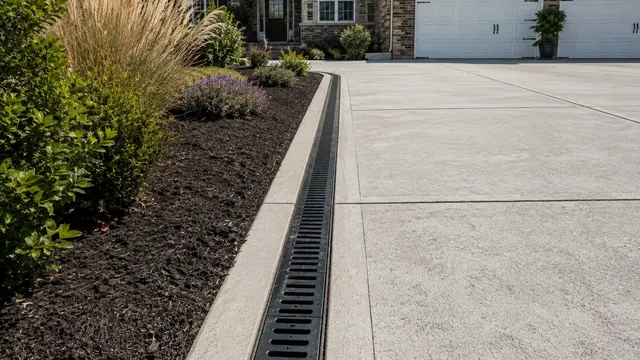
Driveway Drainage Installation Conroe TX: Built for Montgomery County Clay & Rain
Conroe TX Driveway Experts handles driveway drainage installation for Conroe homeowners and property owners across Montgomery County. We assess what's there now, plan the work around your property's specific conditions, and build or rebuild it to the same structural standard as new construction. Standing water on or alongside a driveway is a Montgomery County problem born from 48.8 inches of annual rainfall arriving in intense thunderstorm bursts that overwhelm poorly graded surfaces. We install trench drains, channel drains, and properly sized culvert connections engineered to handle real NOAA Atlas 14 design storm volumes, not just enough capacity to look adequate on a dry day.
Call (936) 284-3720Get a Free Driveway Quote
No obligation. We will call or text back, usually same day.
Driveway Drainage Installation Conroe TX
Here is what a driveway drainage installation project with Conroe TX Driveway Experts actually looks like on the ground, from the numbers that matter to the details most quotes skip past.
An undersized drain looks fine until the first serious thunderstorm, then it backs up and floods exactly where you did not want water. We size every drainage installation to actual regional storm data, not a generic minimum.
At a glance: 48.8 in. is the annual rainfall this addresses, NOAA Atlas 14 covers design storm standard used, and 4:1 Slope is the figure for standard headwall treatment on public row. Budget-wise, most homeowners land in the Priced per project scope based on drain type and length range, with a typical project running Culvert work priced at $25.00 to $40.00 per linear foot per precinct fees; varies by precinct and pipe sizing requirements.
- Trench and channel drains sized to real storm event volumes, not guesswork
- Culvert sizing coordinated with your specific county precinct's requirements
- Safety End Treatments with sloped concrete headwalls on public right-of-way work
- Especially critical at garage thresholds on sloped or Lake Conroe area lots
Cutting Corners
Install a drain sized for light rain and hope it never rains hard
Our Approach
Size drainage to real NOAA Atlas 14 storm event data for Southeast Texas
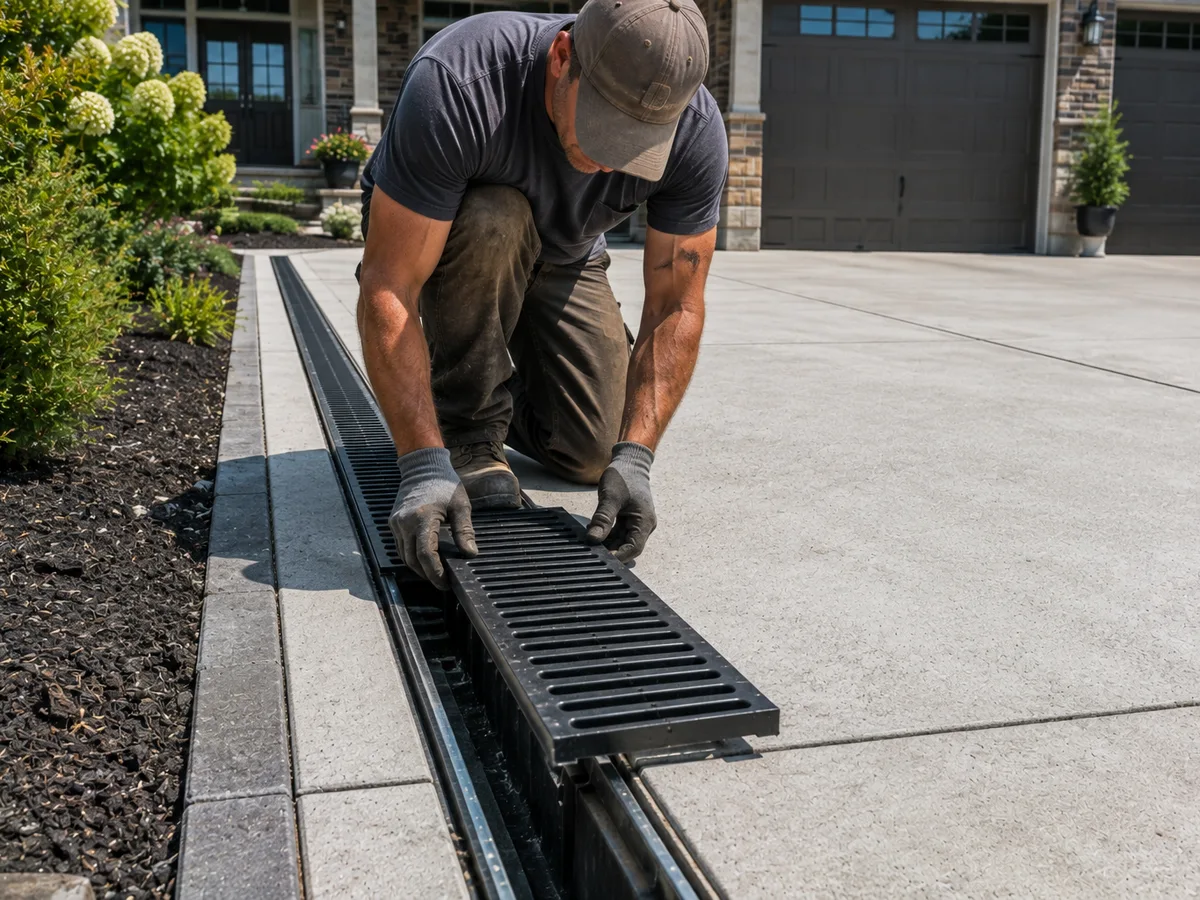
Technical Specs
- Design standard
- NOAA Atlas 14, 10-year to 100-year 24-hour events
- Drain types
- Trench drains, channel drains, culvert connections
- Pipe standard
- RCP Class III or HDPE dual-wall, per county precinct
- Headwall treatment
- 4:1 sloped concrete on public right-of-way
Quick recap: Design standard is NOAA Atlas 14, 10-year to 100-year 24-hour events | Drain types is Trench drains, channel drains, culvert connections | Pipe standard is RCP Class III or HDPE dual-wall, per county precinct | Headwall treatment is 4:1 sloped concrete on public right-of-way.
Driveway Drainage Installation: What Actually Matters
Montgomery County's rainfall pattern is the entire reason driveway drainage is a real engineering problem here rather than an afterthought. Roughly 48.8 inches of rain falls annually, but it rarely comes as gentle, steady precipitation. It arrives in intense thunderstorm bursts that can dump a significant portion of a month's rainfall in under an hour, which means drainage infrastructure sized for average conditions will overflow and pool during the storms that actually matter.
We size trench drains, channel drains, and culvert connections using NOAA Atlas 14 design storm data for Southeast Texas, which accounts for the 10-year through 100-year 24-hour rainfall events the region actually experiences, rather than a generic minimum that looks adequate until the first real storm exposes it. This is particularly important at garage thresholds on sloped lots, common around the Lake Conroe area, where water running down a driveway toward a garage needs a trench drain sized to intercept real flow volume, not just a token grate.
On drives crossing a roadside ditch or connecting to a county road, drainage work also has to meet the specific precinct's pipe standards. Precinct 2, covering West Montgomery County around Montgomery and Magnolia, requires 18 to 24 inch RCP or HDPE pipe minimum, while other precincts enforce their own ditch flow-line and culvert rules. Any drainage work on public right-of-way also requires Safety End Treatments, meaning a 4:1 sloped concrete headwall, which we build to spec rather than leaving an exposed pipe end that creates a real hazard.
Before We Arrive
A little prep on your end keeps the driveway drainage installation timeline on track. Here is what actually helps, specific to this job, not a generic moving-day checklist.
- Point out exactly where water pools or floods after a heavy rain, ideally during or right after a storm
- Note whether your drainage issue is on the driveway surface, at a garage threshold, or in a roadside ditch
- Clear the work area for excavation equipment access
- Confirm any existing culvert permit paperwork if the project involves a ditch crossing
- Expect some excavation and temporary driveway access disruption during installation
How Your Driveway Drainage Installation Works
Four stages, start to finish. We will tell you which day you are on and what to expect next, rather than leaving you guessing mid-project.
Drainage Assessment
We evaluate where and why water is pooling, using real storm event data to size the fix.
Precinct & Permit Check
Culvert and pipe requirements are confirmed against your specific county precinct.
Excavation & Drain Installation
Trench drains, channel drains, or culvert pipe are installed to the calculated capacity.
Grading & Function Test
The surrounding grade is finished and we confirm drainage performance with you.
Long-Term Care for Your Driveway Drainage Installation
A driveway drainage installation is not a set-it-and-forget-it purchase. What keeps it performing years down the line comes down to two things we build in from day one: safety End Treatments with sloped concrete headwalls on public right-of-way work, and especially critical at garage thresholds on sloped or Lake Conroe area lots. Both matter more over time than they do on day one, which is exactly why we do not skip them to shave a day off the schedule.
Beyond the build itself, an undersized drain looks fine until the first serious thunderstorm, then it backs up and floods exactly where you did not want water. We size every drainage installation to actual regional storm data, not a generic minimum.
Typical Cost Range
varies by precinct and pipe sizing requirements. Every quote reflects your specific site, sub-grade condition, and material choice, not a generic flat rate. We would rather walk your property and give you an accurate number than quote blind over the phone and adjust it later.
Driveway Drainage Installation FAQs
Real questions we hear from Montgomery County homeowners before booking driveway drainage installation, answered plainly and without the sales pitch.
Why does water pool at my garage door after rain?
Usually a grading or trench drain sizing issue at the threshold, worsened by Montgomery County's intense thunderstorm rainfall pattern overwhelming an inadequate or missing drain.
Do I need a permit for driveway drainage work?
If it involves a roadside ditch culvert connection, yes, and the pipe size requirement depends on your specific county precinct. We check this before starting work.
What size culvert pipe do I need?
It depends on your precinct and the drainage area involved. Precinct 2 requires 18 to 24 inch minimum RCP or HDPE pipe, for example, while other precincts set their own standards.
Do I need to be present while you install driveway drainage?
We recommend being present for the initial assessment, since pointing out exactly where and when water pools helps us size the fix correctly.
Do you offer free quotes for driveway drainage installation?
Yes, including an assessment of your specific pooling or flooding issue and the storm-sized fix needed to resolve it.
Is driveway drainage installation the right fit for every property in the Conroe area?
Not automatically. What stays consistent on every job is the standard we build to: trench and channel drains sized to real storm event volumes, not guesswork, and culvert sizing coordinated with your specific county precinct's requirements. The specific approach still gets adjusted on-site to your lot's actual soil and drainage, which is why every quote starts with a real site visit rather than a phone-only estimate.
How long should a driveway drainage installation last before it needs major work again?
It depends heavily on whether the sub-grade and base were built correctly the first time, which is the single biggest factor in longevity across every material we install. A driveway drainage installation built to spec, with proper compaction and the right material choice for your soil, should give you many years of service before anything beyond routine maintenance is needed.
What voids a warranty or shortens the life of a driveway drainage installation?
The two most common culprits we see are skipped sub-grade prep on the install side and neglected drainage on the maintenance side. Water finding its way under or beside a driveway, and clay sub-grade that was never properly compacted or stabilized, account for the overwhelming majority of early failures we get called out to diagnose.
Ready for Driveway Drainage Installation in the Conroe Area?
Call Conroe TX Driveway Experts for a free, honest quote built around your specific soil, drainage, and budget.
Call (936) 284-3720